Abel's success in mathematics was long sought after by many. Perhaps from looking at his earlier life, it is easy to tell that he by no means came from a rich, or luxurious background and at times it felt as if he was getting nowhere. This was, of course, before he found his success in many areas of mathematics. One of his first papers which pertained to the unsolvability of quintic equations was merely glanced at, and discarded by the mathematical journal's editor, who we now know as Carl Fredrich Gauss.
Yet, despite many setbacks, Abel continued to pursue his passion where he eventually was funded by his home country of Norway's government to travel to France and Germany. During his trip to Paris, France, where he presented one of his papers about elliptic functions, which caused mathematicians Adrien Legendre to refer to his findings as 'monumental'.
 This state sponsored trip to Germany and France proved to be a very pivotal point in Abel's career. This is not only due to his ability to be exposed to many of the other great mathematician we often associate with great theorems, but it also allowed him to unlock more opportunities. For example, after visiting Berlin, a few years later Abel was offered a professorship in Berlin by mathematician August Crelle, whom he had met previously on his original state sponsored trip. Unfortunately, this offer was met with terrible news, namely the death of Neils Henrik Abel on April 26, 1829, a mere two days after the offer had been received.

Despite the death of Neils Henrik Abel, his legacy continues to live on through things such as the establishment of the Abel Prize, which is an award established on 23 August 2001, by the Norwegian government and annually awarded to mathematicians with the goal to 'First create a broad cultural commemoration, Second to raise a worthy monument in memory of the genius'.
Abel is the personification of the character trait of perseverance that almost any mathematician has. Despite seemingly every odd being stacked against them, mathematicians such as Abel, prevail, which is a lesson we can all learn from and apply, not just in our own mathematics but also in our own daily lives.
Yet, despite many setbacks, Abel continued to pursue his passion where he eventually was funded by his home country of Norway's government to travel to France and Germany. During his trip to Paris, France, where he presented one of his papers about elliptic functions, which caused mathematicians Adrien Legendre to refer to his findings as 'monumental'.
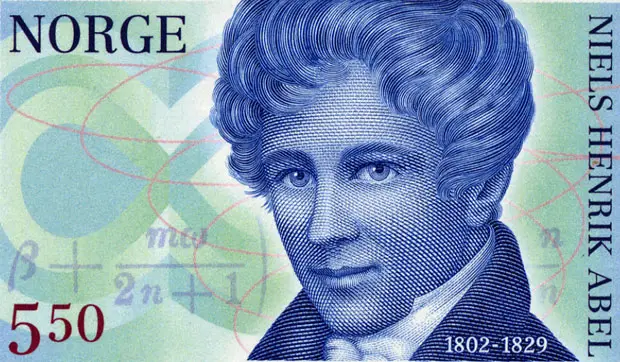 This state sponsored trip to Germany and France proved to be a very pivotal point in Abel's career. This is not only due to his ability to be exposed to many of the other great mathematician we often associate with great theorems, but it also allowed him to unlock more opportunities. For example, after visiting Berlin, a few years later Abel was offered a professorship in Berlin by mathematician August Crelle, whom he had met previously on his original state sponsored trip. Unfortunately, this offer was met with terrible news, namely the death of Neils Henrik Abel on April 26, 1829, a mere two days after the offer had been received.
Despite the death of Neils Henrik Abel, his legacy continues to live on through things such as the establishment of the Abel Prize, which is an award established on 23 August 2001, by the Norwegian government and annually awarded to mathematicians with the goal to 'First create a broad cultural commemoration, Second to raise a worthy monument in memory of the genius'.
Abel is the personification of the character trait of perseverance that almost any mathematician has. Despite seemingly every odd being stacked against them, mathematicians such as Abel, prevail, which is a lesson we can all learn from and apply, not just in our own mathematics but also in our own daily lives.
Works Cited
“Abel, Niels Henrik (1802-1829) -- from Eric Weisstein's World of Scientific Biography.” Scienceworld.wolfram.com, scienceworld.wolfram.com/biography/Abel.html.
“Abel Theorem.” Abel Theorem - Encyclopedia of Mathematics, www.encyclopediaofmath.org/index.php/Abel_theorem.
Britannica, The Editors of Encyclopaedia. “Niels Henrik Abel.” Encyclopædia Britannica, Encyclopædia Britannica, Inc., 18 Oct. 2017, www.britannica.com/biography/Niels-Henrik-Abel.
“The History of the Abel Prize.” Hjem, www.abelprize.no/c53679/artikkel/vis.html?tid=53709.
“Niels Henrik Abel.” Abel Biography, www-groups.dcs.st-and.ac.uk/history/Biographies/Abel.html.
From reading the first paragraph, you intertwine his success with his failures so much that I don't know if this post is going to be one or the other.
ReplyDelete